

Teens, Consent, and the Conversations That Matter
Teens, Consent, and the Conversations That Matter

Sexual Assault Awareness Month Is a Call to Action for All of Us

April is Sexual Assault Awreness Month

The need for sexual violence prevention in schools is urgent and undeniable. Sexual violence remains a far too common form of violence in abusive teen dating relationships. According to the Chicago Public Schools Youth Risk Behavior Survey, 6% of high school students report experiencing sexual violence in a dating relationship. The numbers are even higher for those most vulnerable: 8% of girls and 12% of LGBTQ+ students report this deeply harmful experience.

Consent education is not optional, it is essential.

Consent: More Than a Definition

At Take Back the Halls, we center our work on building real understanding, starting with the FRIES model of consent from Planned Parenthood so students have a clear foundation.

But knowledge alone isn’t enough.

Many of the young people we work with can define consent. But then we ask a simple, real-life question “What would you say if you wanted to kiss someone?” They hesitate. They tell us asking would be awkward or that it “kills the mood.”

Making Consent Real

This is where real learning begins.

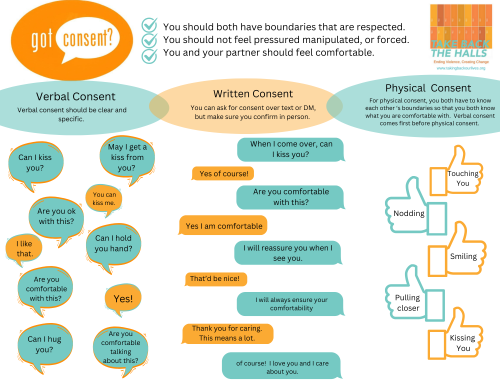
Through role-plays and interactive activities, we help students practice what consent actually sounds like, making it natural, confident, flirty, authentic, and fun. Because consent isn’t just a concept. It’s a conversation.
Consent

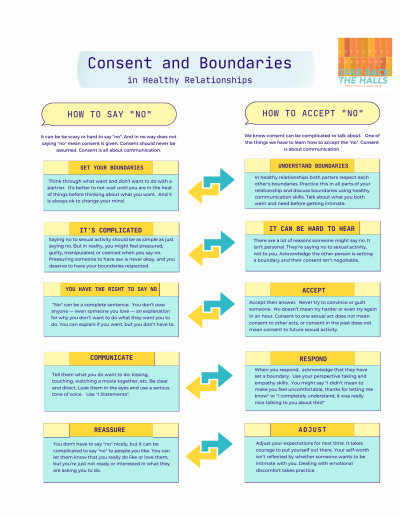
And just as importantly, students learn that consent isn’t only about hearing “yes.” It’s also about recognizing, respecting, and responding to “no.”  

When students practice these skills in their own voices, they gain the confidence to navigate relationships with respect, clarity, and care.

Consent & Boundaries English&Spanish

Talking to Your Teen About Consent

Talking about sex and relationships with teens can feel uncomfortable for both sides. But avoiding the conversation doesn’t protect young people. It leaves them unprepared.

Here are some of the most common barriers:

Lack of information
Many adults didn’t receive comprehensive sexual education themselves and worry they won’t have the “right” answers.

Fear and worry
Some caregivers hope their teens aren’t engaging in sexual activity and hope that by delaying the conversation, they can delay the behavior. But silence doesn’t protect young people. It leaves them without guidance.

Judgment and punishment
Teens consistently report that lectures, anger, or punishment shut down communication and can lead to secrecy instead of safety.

Not being specific
Telling teens to “make sure you have consent” without explaining what that actually looks like leaves them without the tools they need.

How to Talk to Teens About Consent in a Healthy Way

Start early
Consent begins long before dating. Teaching young children to ask before hugging or holding hands builds a lifelong understanding of boundaries.

Get the information you need
You don’t have to know everything. Learning alongside your teen models curiosity and openness and builds trust.

Make safety more important than rules
If teens fear punishment, they are less likely to seek help when something goes wrong. Make it clear: their safety comes first.

Go beyond the basics
“No means no” is a starting point, not the finish line. Teens need real communication skills to express desire, boundaries, and respect.

Listen before you advise
Lead with curiosity. When teens feel heard, they are far more open to guidance.

Use inclusive language
About 30% of Chicago Public School students identify as LGBTQIA+. Inclusive, gender-neutral language helps all teens feel seen and safe.

Talk about pornography
Many young people report that their first exposure to sexual content was pornography, often unintentionally. It’s critical they understand that pornography is not real life and frequently portrays unhealthy, unrealistic, or exploitative dynamics.

Learn More

There are many trusted resources available to support these conversations, including Planned Parenthood, Response for Teens, and the National Sexual Violence Resource Center.

No Comments

Sorry, the comment form is closed at this time.