

03 Jun Consent is a Lifestyle

Consent is a Lifestyle
By Molly Tinkey
Consent is a never-ending way of living your life, a constant stream of communication that carries through everyday interactions. When we usually talk about consent, people immediately think about physical touch, probably in romantic relationships. But, consent is everywhere. Whether we see it in a legal sense or on technology – consent to share your cookies, consent to save your password, or consent to share a picture online. Or consent to be kissed by grandma or bring your boyfriend to the girls night out. Really, we should be asking for consent all the time, most likely every single day: with strangers, with friends and family, and especially with romantic partners.
Consent doesn’t start with the question or end with a yes or no. It begins way before that, with how comfortable someone feels answering honestly. It depends on whether a person feels safe enough to say no, maybe, not right now, or anything other than the favorable answer. A lot of the pressure surrounding consent never even has to be spoken out loud because it has already been felt over time. Expectations, relationship dynamics, social pressure, and past experiences can all shape the decisions people make, sometimes without them even realizing it.
Consent can be a framework for your lifestyle. It does not always come naturally, and it is a learned process to practice clear communication, active listening, boundaries, and autonomy in everyday choices. Consent is not just something that exists during serious conversations or intimate moments. It can show up in small interactions too, like asking before venting to someone, checking if a person has the energy to talk, respecting someone’s space, or understanding that people are allowed to change their minds.
A culture of consent takes everyone’s boundaries into consideration, even in a society where many people do not know how to put their boundaries into words yet. Creating that kind of environment means building relationships where people feel empowered to communicate honestly and trust that their boundaries will be respected.
Rape Culture
Consent culture is needed in a society consumed by rape culture. Rape culture is a societal environment where sexual violence is normalized, excused, and even joked about. It creates an environment where “take first and ask forgiveness later” becomes status quo. Instead of seeking a clear and willing yes, people are taught to rely on the absence of the word no. Silence, hesitation, or discomfort are often ignored because direct communication around consent is not treated as necessary.
This mindset creates pressure around consent that people can feel even when nothing is explicitly said. It teaches people that asking directly is awkward, vulnerable, or unnecessary, while rejection becomes something to avoid at all costs. Consent culture pushes against these ideas by encouraging communication, accountability, and respect for autonomy instead of entitlement.
Enthusiastic Yes
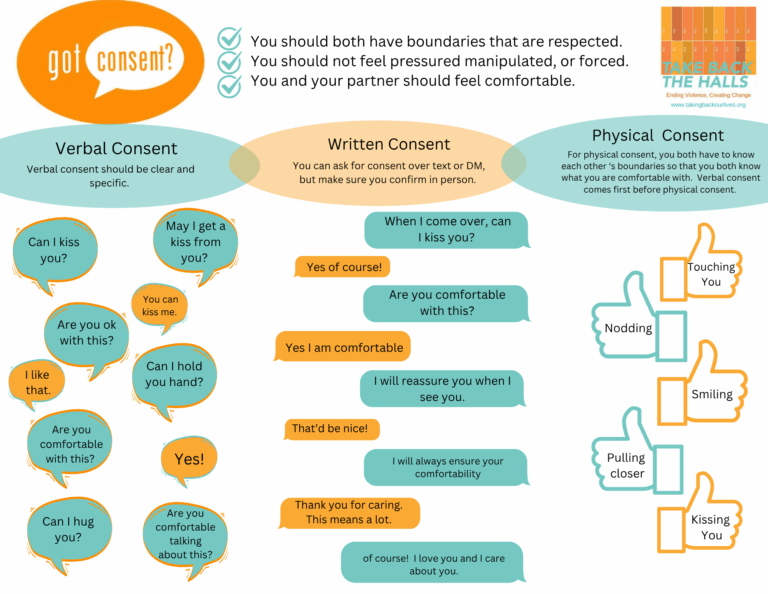
A large part of conversations around consent relies on the idea of an “enthusiastic yes.” People say things like check body language, make sure they are smiling, nodding, or visibly excited. But in reality, everyone expresses enthusiasm differently, and not everyone has to be jumping up and down with excitement to genuinely want something.
This becomes especially important when talking about neurodivergent people or people in the ace community. Neurodivergent people may struggle with reading or expressing social cues in ways society expects, but honestly, neurotypical people struggle with communication too. It is incredibly common for people to say what they mean indirectly instead of communicating directly. Because of this, relying too heavily on body language or traditional expressions of enthusiasm can become limiting and sometimes exclusionary.
The enthusiastic consent model does not always feel supportive of communication styles outside what society sees as “normal.” Consent should focus less on performing enthusiasm correctly and more on creating environments where people feel safe enough to answer honestly without pressure. Where enthusiasm means knowing your wants and needs and feeling comfortable and confident to share them in whatever way you please.
Clear Communication
Asking for consent means risking rejection, and that vulnerability is not something society encourages very often. Direct communication can feel uncomfortable because many people are taught to avoid saying exactly what they mean. But consent depends on creating spaces where honesty feels safer than pressure or assumptions.
Clear communication means actively listening instead of looking for loopholes or relying on silence. It means understanding that consent is ongoing and can change at any moment. It also means recognizing that communication looks different for everyone, and respecting those differences instead of expecting people to fit into one standard way of expressing themselves.
Consent Culture
When consent is placed at the center of our interactions, it creates an environment where people feel empowered to express their boundaries and trust that those boundaries will be honored. Consent culture is not just about avoiding harm. It is about building relationships rooted in trust, communication, autonomy, and respect.
Consent is not simply a question with a yes or no answer. It is an ongoing practice of caring about how other people feel, making space for honesty, and understanding that every person deserves control over their own choices and boundaries.
Sorry, the comment form is closed at this time.