The holiday season can be filled with joy—celebrations, traditions, and time with the people we care about. But it can also bring a lot of pressure. Between juggling social events, navigating tricky family dynamics,
managing financial strain, and trying to meet everyone’s expectations, it’s easy to feel overwhelmed.
That’s why setting healthy boundaries is one of the greatest gifts you can give yourself and your loved ones. Boundaries create the time, space, and emotional safety you need to truly enjoy the season.
Why Set Boundaries?
Boundaries are a powerful form of self-care. They’re not selfish—they’re essential.
When we set clear, respectful limits, our relationships actually become healthier, stronger, and more sustainable. Boundaries help you show up as your best self, and they help the people you care about understand how to support you.
Types of Holiday Boundaries
✨ Time Boundaries
Holiday calendars fill up fast. It’s impossible to attend everything—and you don’t have to try. It’s completely okay to decline invitations or limit how long you stay at an event.
✨ Emotional Boundaries
Your emotional energy is valuable. You get to choose which relationships to invest in this season, especially those that feel supportive and reciprocal.
✨ Conversation Boundaries
Gatherings can sometimes spark tough conversations—politics, personal topics, old conflicts, or family gossip. You have every right to steer away from discussions that don’t feel safe or productive.
✨ Financial Boundaries
Gifts, travel, hosting, and festivities can add up fast. Setting a budget—and sticking to it—is responsible, healthy, and completely valid.
How to Communicate a Boundary
Whether you’re expressing a feeling, asking for support, or setting a limit, communication is key. In
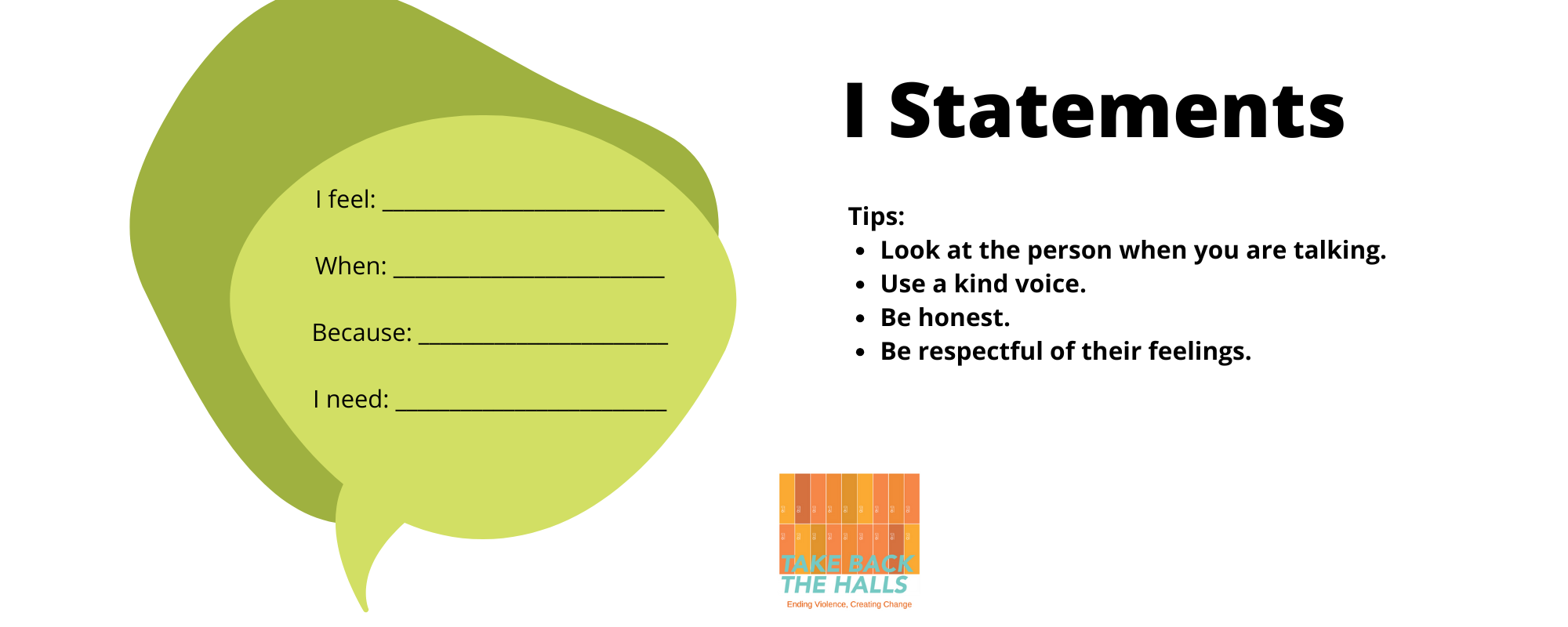
Take Back the Halls, we use “I Statements” to express boundaries clearly and respectfully.
“I Statements” are assertive—not passive, not aggressive. They help resolve conflict and express needs without blaming anyone. They keep the focus on your feelings and what you need.
The TBTH “I Statement” has four parts:
I feel… → Name the emotion.
When…→ Describe the situation causing that feeling.
Because… → Explain why it affects you.
I need… → Request what would help or what you’d like to be different.
Example:
I feel overwhelmed and stressed when you expect me to attend every family gathering because it leaves me no time to recharge. I need to take this Sunday for myself.




Sorry, the comment form is closed at this time.