Understanding the Cycle of Violence
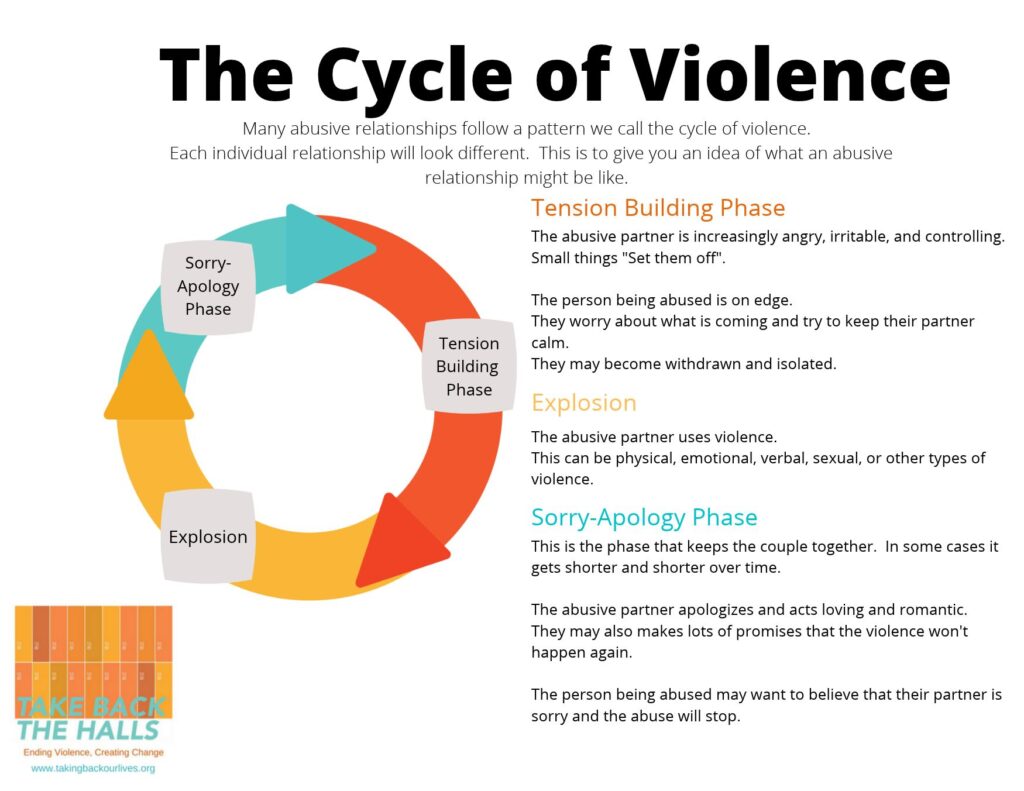
Abusive relationships often follow a pattern known as the Cycle of Violence. While every relationship is different, abuse can happen in a repeating cycle of three phases: tension building, explosion, and apology.
During the Tension Building Phase, the abusive partner may become increasingly angry, irritable, jealous, or controlling. The person being abused may feel like they are walking on eggshells, trying to avoid conflict or keep their partner happy.
During the Explosion Phase, the abuse occurs. It may be physical, emotional, verbal, sexual, or another form of harmful behavior.
During the Sorry-Apology Phase, the abusive partner may apologize, act loving and affectionate, and promise that it will never happen again. The person being abused may want to believe things will change and that the abuse is over.
Over time, this cycle may repeat. The tension and abuse may become more frequent, while the apologies and periods of affection may become shorter.
It’s important to remember: Apologies, promises, and loving moments do not erase abuse. You are not responsible for your partner’s abusive behavior, and you do not have to wait for the cycle to repeat before seeking help.
Healthy vs. Unhealthy Relationships
Healthy Relationships Include
Respect
Trust
Honest communication
Independence
Boundaries
Support for personal goals
Warning Signs of Abuse
Extreme jealousy
Constant texting or checking up
Isolating someone from friends and family
Monitoring social media activity
Threats or intimidation
Pressuring sexual activity
Blaming others for abusive behavior